
Resources
The cost of flooding to UK business
Flooding costs UK businesses far more than the water damage on the day. The true cost combines direct property damage, business interruption while a site is out of action, and losses that insurance never covers. This guide sets out what flooding costs UK business, using figures from the Association of British Insurers, the Environment Agency and Flood Re, so you can build the case for acting before the loss.
Updated October 25, 2026
What this guide covers
A short guide to what flooding actually costs a UK business, built from sourced figures so you can take it upward.
Understand the cost
The three costs of a flood
Flooding costs more than the water damage on the day. These are the three costs a budget holder needs to see, in descending order of how often they're missed.
Direct damage
Repairing or replacing buildings, stock, plant and fit-out. This is the visible cost, the one insurers assess first, and the one most budget holders picture when they think about flood.
Business interruption
Lost revenue and added cost while a site is out of action. For many businesses this exceeds the direct damage, it's the cost that hurts the P&L, not just the balance sheet.
Uninsured and uninsurable loss
Excesses, exclusions, cover a flood-exposed site cannot get, and the reputational and contractual fallout that follows. This is the cost that lands on the business, not the insurer.
The direct cost of flood damage
Repairing or replacing flood-damaged buildings, stock, plant and fit-out is the most visible cost of a flood, and usually the first figure an insurer or loss adjuster puts in front of you. A sourced average for UK commercial flood claims is not yet published on this page, it needs verifying against the Association of British Insurers before it can be cited here.
[Figure pending source verification: average commercial flood claim value, Association of British Insurers]
What's already well established is the mechanism that drives the number up: the less notice a business has, the less it can do to limit the damage. Advance alert, moving stock, protecting equipment, securing a site, is what keeps this cost down, regardless of the exact figure.
The hidden cost: business interruption
When a site floods, the losses don't stop when the water recedes. Weeks or months of downtime can follow, lost trading, displaced operations, missed contracts. For many businesses, this business interruption cost exceeds the direct damage to the building itself.
[Figure pending source verification: average business-interruption / downtime cost from flooding, Association of British Insurers or Environment Agency business-flooding study]
The pattern holds regardless of the exact figure: the businesses that lose the most are the ones that find out too late to protect trading.
The uninsured cost of flooding
Not every flood loss is recovered from insurers. Excesses, exclusions and the difficulty of insuring flood-exposed commercial sites all leave a gap the business carries itself. Flood Re covers homes, not commercial property, so many flood-exposed businesses face this gap directly.
That gap is why the flood-alert conversation matters as much as the insurance conversation, most UK floods happen with no free warning at all.
Verified exposure data
How much of the UK is at risk
These figures are drawn directly from named primary sources. A headline £ figure for the annual cost of flooding to the UK economy is a known gap pending verification against Environment Agency and ABI data, this page will not publish an unsourced number.
Up 43% on the prior assessment (Environment Agency, National Assessment of Flood Risk, NaFRA2, 2024).
Environment Agency assessment of river and coastal flood risk.
Surface water is the leading source of flooding across the UK (Environment Agency).
The Previsico answer
How to mitigate the cost of flooding
The single biggest lever on flood cost is time.
See the risk before the water arrives
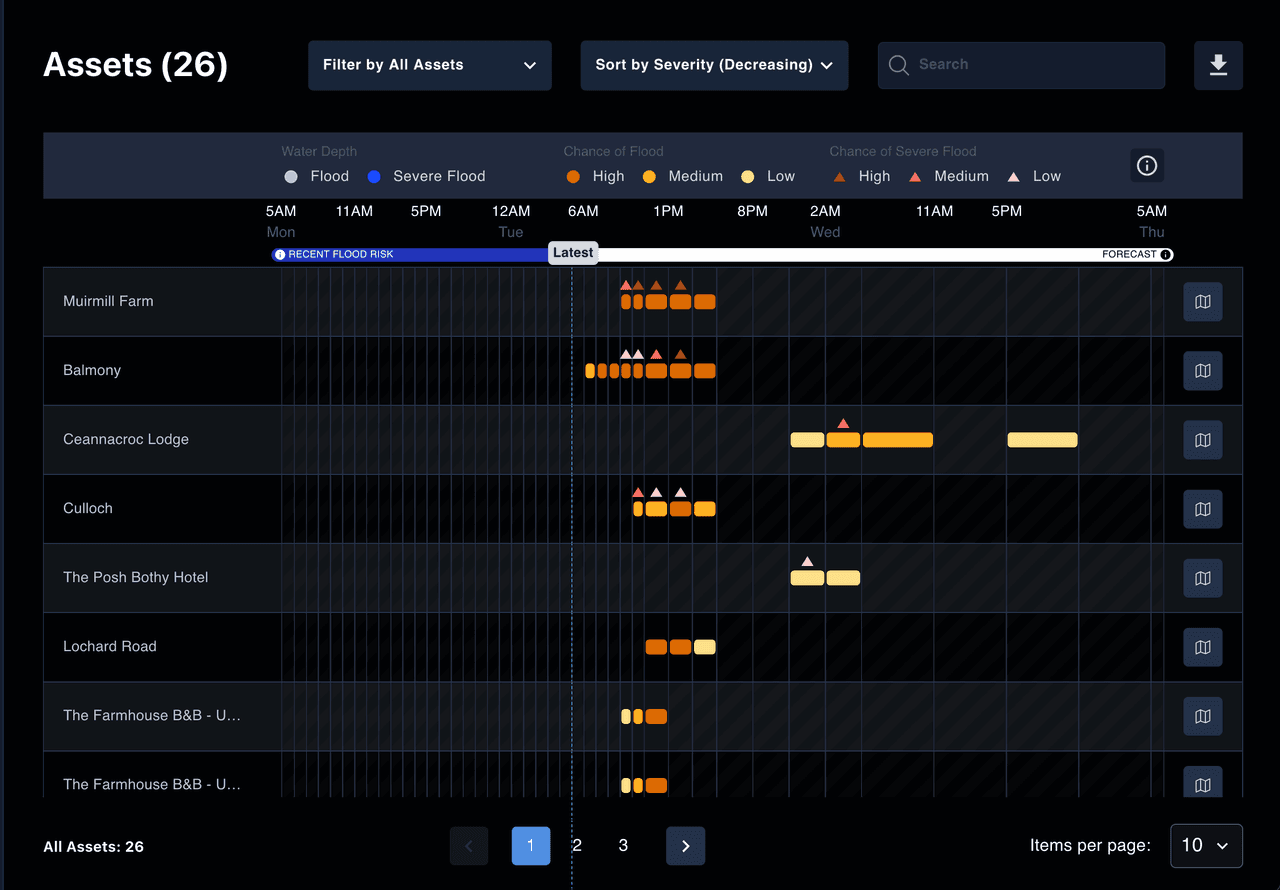
Property-level alerts up to 48 hours ahead give a business the notice to move assets, protect a site and keep trading, mitigating the loss rather than just recording it. Every asset in a portfolio is ranked on one forecast timeline, so a risk or resilience manager can act on the sites that matter first.
Explore the platformFrequently asked questions
The questions we hear most from risk and resilience teams building the case for flood resilience.
Flooding costs a business in three ways: direct damage to buildings, stock and equipment; business interruption while the site is out of action; and uninsured or uninsurable losses that fall outside any policy. Two verified exposure figures underpin the scale of the problem, 4.6 million UK properties at risk of surface water flooding, and 2.4 million at risk from rivers and the sea (Environment Agency, National Assessment of Flood Risk, NaFRA2, 2024). Sourced £ figures for the average direct-damage and business-interruption cost are being verified against the Association of British Insurers and will be added once confirmed.
Business interruption is the lost revenue and added cost a business incurs while a flooded site is out of action, lost trading, displaced operations, missed contracts, and overheads that continue regardless. For many flood-hit businesses, this cost exceeds the bill for repairing the building itself.
Not always. Excesses, exclusions and the difficulty of insuring flood-exposed commercial sites can leave a gap the business carries itself. Flood Re, the scheme that helps insure flood-exposed homes, does not cover commercial property, so many flood-exposed businesses face this gap directly.
The biggest lever on flood cost is time. Property-level alerts up to 48 hours ahead give a business the notice to move stock, protect equipment and keep trading, mitigating the loss rather than just recording it afterwards. See how this applies to your sector on our solutions pages.
Build the case for flood resilience.
Take these figures to your budget holder, then see what property-level alerts could do for your own sites.