
 Lauren LegateUpdated News & insights
Previsico’s State of Flood Resilience Report 2026: Awareness is rising, but preparedness hits a new low
New research from Previsico reveals that fewer than 1 in 10 organisations have a flood action plan in place, even as flood losses reach record highs
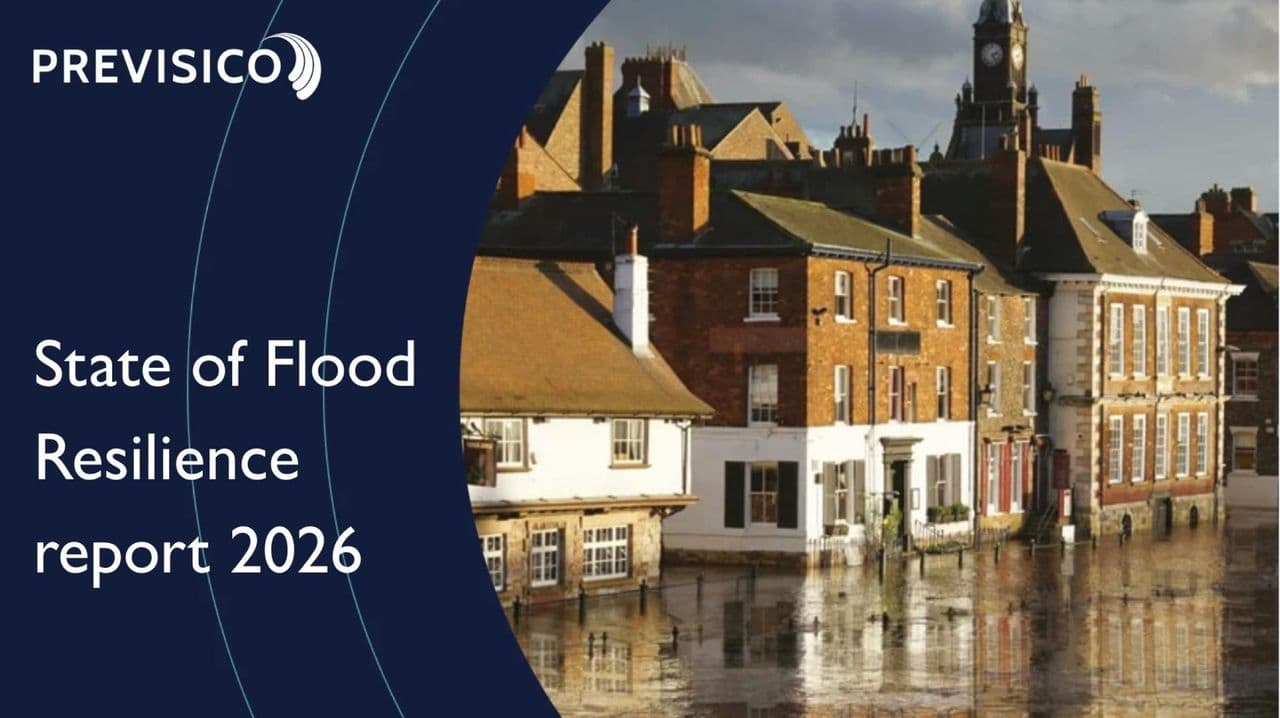
New research from Previsico reveals that fewer than 1 in 10 organisations have a flood action plan in place, even as flood losses reach record highs
Previsico today publishes the second annual State of Flood Resilience Report, drawing on insights from over 70 organisational leaders across the UK. The findings reveal a deepening paradox: awareness of flood risk is growing, but preparedness has declined sharply leaving businesses, insurers, and asset holders dangerously exposed.
With weather-related insurance claims reaching £1.2 billion in 2025 – a 14% increase on the previous year – and annual flood losses projected to increase five-fold by 2050, the urgency to act has never been greater. Yet the data tells a troubling story.
Key findings from the 2026 report:
- Only 8% of respondents said that they or all of their clients have flood action plans in place across all locations, down from 30% in 2025
- 72% of respondents believe they will be personally impacted by flooding in the future
- 56% of respondents sometimes feel overwhelmed by the challenges posed by flooding, with a further 25% reporting frequent overwhelm
- 35% cite business continuity as their primary concern around flooding
- The biggest barrier to flood resilience is cost and budget (35%), closely followed by uncertainty about future flood risk (21%)
Jonathan Jackson, CEO of Previsico, said: "Advances in modelling, improved surface-water mapping, and updated climate projections now classify roughly two-thirds of England as 'floodable' under certain conditions, a scale of exposure that far exceeds traditional assumptions. Yet many organisations continue to underestimate their exposure to flood risk, despite increasingly robust data that tells a very different story."
The report also highlights a critical inconsistency: while adoption of early alert systems has grown significantly – rising from 35% to 49% over the past year – this proactive investment is undermined by the near-total absence of flood action plans. An early warning is only as useful as the plan behind it.
This year's report introduces a compelling case study comparing flood risk to fire risk, drawing a direct parallel with how the insurance industry drove the mass adoption of smoke detectors in the 1970s and 80s. At locations exposed to flood risk, flooding is now twice as likely as fire, yet 99% of businesses have a fire plan, while fewer than 8% have one for flood.
Jackson continued: "The risk and insurance sector needs to treat flood with the same seriousness long applied to fire. Closing that gap will require insurers and risk advisors to set clearer expectations and embed stronger resilience practices so that flood becomes a managed risk, not an escalating vulnerability."
The report is produced from data collected by Previsico via a survey and through webinars with Airmic and InsTech, and represents Previsico's ongoing commitment to tracking how flood risk awareness, education, and attitudes are evolving across the UK.
Download the full State of Flood Resilience Report 2026 here.
Lauren Legate